
A Genuinely Original Theme That Makes Every Decision Feel Meaningful
Popcorn Game does something that most strategy board games never quite manage: it makes its theme inseparable from its mechanics. You’re not just moving tokens around a board and calling it a cinema — you’re actually making the decisions a movie theater owner makes. Which films do you program this week? Do you spend your budget on a blockbuster action title that attracts big crowds, or invest in an arthouse drama that appeals to a more dedicated niche audience? When does a movie go stale and need to be pulled from your schedule before it stops drawing guests? These questions drive every turn, and they feel genuinely connected to the real logic of running a cinema rather than being arbitrary game choices wearing a cinematic costume. The result is a game where the theme amplifies the strategy rather than merely decorating it — and that quality, rarer than it should be in modern board game design, is what gives Popcorn its lasting appeal at the table.
Bag-Building Mechanics That Are Fresh, Tactile, and Deeply Satisfying
The defining mechanical innovation of Popcorn Game is its bag-building system — and it delivers exactly the tactile satisfaction and strategic depth that the best tabletop mechanics produce. Players conceal their guests inside cloth bags, creating genuine hidden information that keeps every round unpredictable and every opponent’s situation partially unknown. This isn’t just a novelty feature — the bag mechanic drives the core tension of the game, because what you draw from your bag on any given turn determines what moves are available to you, and building a better bag over the course of the game is the primary strategic challenge. Knowing when to activate guests, when to advertise for new ones, and how to structure your bag for the draws you need most is the puzzle at the center of Popcorn — and it’s a puzzle that remains engaging across multiple plays because no two bags evolve the same way twice.
Outstanding Production Quality and Table Presence That Earns Compliments Before the First Turn
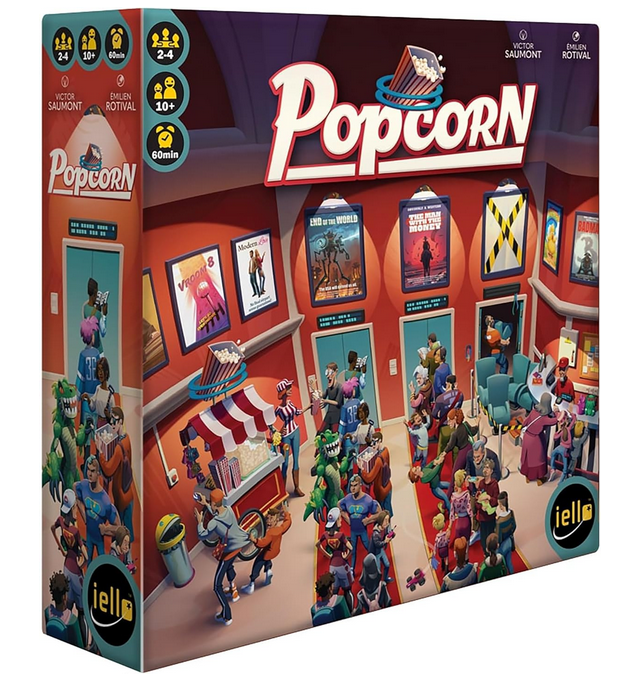
Open the Popcorn Game box and the first thing you’ll notice is that this game was made by people who care about how it looks and feels. The artwork is immediately distinctive — detailed, colorful, and genuinely funny in the way that great board game illustration achieves when the artists are clearly having as much fun as the players. The physical components are built to the quality standard that the price point deserves: solid pieces, well-produced bags, and a box layout that — with minor exceptions — keeps everything organized and accessible between sessions. At the table, Popcorn has what experienced board gamers call table presence — the quality of looking alive, interesting, and worth engaging with when set up for play. For groups where the visual appeal of a game affects how readily new players engage with it, Popcorn’s production values do meaningful work before a single rule has been explained.
Kollide By Relatable, Exciting Magnetic Game for Family Game Night, Great Fun Games for Kids, Includes 1 Rope, 20 Magnets, and Instructions
Popcorn Game: The Complete Guide to the Movie Theater Strategy Game Everyone Is Talking About
There is a particular kind of board game that hits differently from everything else on the shelf. Not the most mechanically complex game in the collection. Not the one with the most components or the longest rulebook. The kind of game that earns its place through a combination of qualities that are genuinely difficult to achieve simultaneously: a theme that actually works, mechanics that serve that theme rather than fighting it, production quality that makes the whole package feel worth the investment, and a play experience that generates real conversation, laughter, and the kind of competitive engagement that brings people back to the table again and again.
The Popcorn Game is that kind of game. A bag-building, worker-placement, resource-management experience wrapped in the irresistibly appealing setting of a competitive movie theater business, the Popcorn Game has been earning enthusiastic word-of-mouth since its release — and for reasons that go considerably deeper than its charming aesthetics. This comprehensive guide covers everything worth knowing about the Popcorn Game: what it is, how it plays, what makes it strategically interesting, who it’s for, how it compares to similar games, and why it has resonated so strongly with the tabletop gaming community.
What Is the Popcorn Game?
The Popcorn Game is a competitive strategy board game for two to four players, designed for ages ten and up, with a play time of approximately sixty minutes per session. Players take on the roles of rival movie theater owners competing to attract the most cinema guests, program the most satisfying film lineup, and accumulate the most popcorn — the game’s primary victory currency — by the time the final credits roll.
The Popcorn Game combines three mechanical systems that work in concert: a worker placement layer that governs how players take actions each turn, a resource management system that controls budgeting for movies, theaters, and advertising, and a bag-building mechanic — the Popcorn Game‘s most distinctive and innovative feature — in which players conceal their guest tokens inside cloth bags, drawing from them to determine what options are available each turn.
The result is a game that plays more richly than its approachable premise suggests. The Popcorn Game presents itself with colorful, humorous artwork and a lighthearted cinema theme that makes it immediately accessible to a wide range of players — but underneath that welcoming surface lies a genuinely strategic experience with meaningful decisions on every turn, a satisfying learning curve that rewards experience, and enough variability between sessions to sustain long-term engagement.
The Setting: Why the Movie Theater Theme Works So Well
Theme in board game design is a more complex subject than it might appear. Games can use a theme decoratively — applying a visual aesthetic to mechanics that have no logical connection to the setting — or they can use a theme structurally, building mechanics that mirror the real logic of the world they represent. The best games in the latter category feel like simulations of their themes even when they’re not — they create the sensation of actually doing the thing the game is about rather than just playing with tokens that happen to be shaped like relevant objects.
The Popcorn Game achieves genuine thematic integration. Every major decision in the Popcorn Game maps logically onto the real decisions a movie theater owner would face. Which films do you acquire for your programming schedule? Do you invest in a major blockbuster action film that attracts large general audiences, or a carefully curated arthouse program that draws a dedicated but smaller crowd? How do you balance the short-term appeal of popular mainstream comedies against the longer-term satisfaction metrics of drama and fantasy programming? When does a movie’s audience appeal start declining, signaling that it’s time to refresh your lineup before guest numbers drop?
These are genuine strategic questions with real mechanical consequences in the Popcorn Game — and they’re also the actual questions that cinema programmers and theater managers navigate in the real world. That alignment between game logic and real-world logic is what gives the Popcorn Game its thematic coherence, and it’s why the game feels intuitive to learn even for players who don’t have deep board game experience. When the game’s decisions make real-world sense, the rules become easier to internalize and the strategic thinking feels natural rather than arbitrary.
The movie genres available in the Popcorn Game — comedies, science fiction and fantasy, arthouse and drama, and action — each carry different guest appeal profiles, creating a meaningful differentiation between programming strategies. A theater owner who leans heavily into action programming attracts a different audience composition than one who builds a reputation for quality drama and independent cinema. These genre identities have mechanical implications throughout the Popcorn Game, making the initial programming choices feel genuinely consequential rather than cosmetic.
The Bag-Building Mechanic: The Heart of the Popcorn Game
The feature that most distinguishes the Popcorn Game from comparable titles in the medium-weight strategy space is its bag-building mechanic — a variation on the deck-building format that most tabletop gamers will recognize from games like Dominion or Clank!, but implemented here through physical cloth bags and tactile guest tokens rather than card decks.
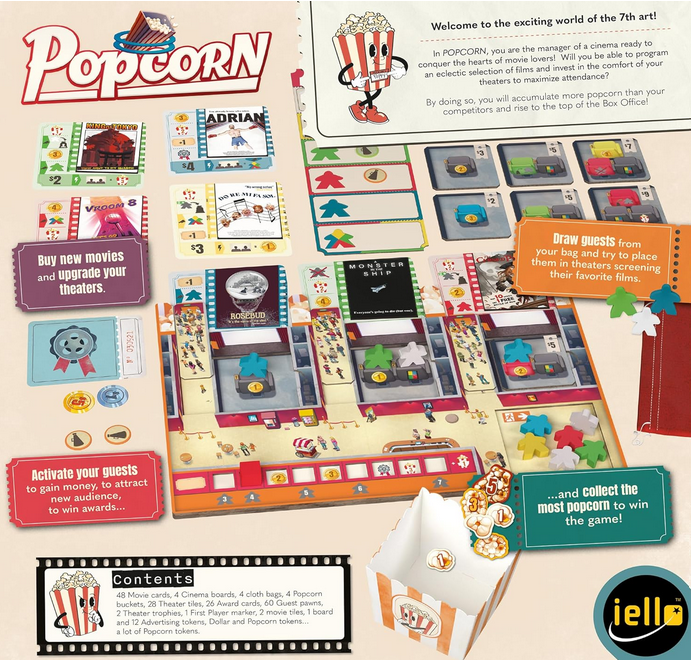
In the Popcorn Game, each player manages a cloth bag containing guest tokens representing the cinema-goers they’ve attracted to their theater. The composition of this bag — which types of guests you’ve accumulated, how many of each, and how they’re proportioned against one another — is the primary strategic asset that each player builds and refines over the course of the game. On each turn, players draw from their bag to determine what actions and options are available to them, making the management of bag composition a central ongoing challenge.
Why Bag-Building Works Better Than Card-Building for This Theme
The choice to implement the building mechanic through physical cloth bags rather than card decks is not merely aesthetic — it has meaningful mechanical and experiential consequences that make the Popcorn Game feel distinct from card-based alternatives.
The tactile dimension of physically drawing tokens from a cloth bag creates a different quality of anticipation than flipping cards from a deck. There is something genuinely satisfying about reaching into the bag, feeling the tokens shift, and drawing out a handful that either aligns with your strategic needs or forces you to adapt. The physical act of concealment — keeping your bag’s contents hidden from opponents — creates genuine information asymmetry that card-based games often struggle to maintain without elaborate shuffling procedures.
The hidden information aspect of the Popcorn Game‘s bag mechanic also creates interesting deductive gameplay. Experienced players pay attention to what opponents are drawing, what actions they’re taking with those draws, and what those choices imply about the composition of their bags. This metagame layer — reading opponent bags through their visible actions — adds strategic depth that the rulebook doesn’t explicitly teach but that emerges organically from repeated play.
Building a Better Bag: The Core Strategic Loop
The central strategic challenge of the Popcorn Game is building a bag that consistently produces draws aligned with your overall theater strategy. This is not a static challenge — the ideal bag composition changes as the game progresses, as the available movie market shifts, and as you gain more information about what your opponents are doing.
Early in the Popcorn Game, most players focus on establishing a basic guest foundation — attracting enough initial cinema-goers to generate meaningful popcorn income while keeping options open for strategic refinement. The middle game is where the Popcorn Game‘s strategic depth really emerges: players who have committed to a genre strategy need to build bags that support that strategy with consistent draws, while players who are adapting to market conditions need bags flexible enough to pivot without losing momentum.
Late in the Popcorn Game, bag composition becomes a precise optimization challenge. With a clearer picture of which movies will be available, which guest types generate the most popcorn in combination with your current programming, and what your opponents are likely to do in their remaining turns, the final sessions of bag management in the Popcorn Game require the most sophisticated forward thinking of any phase of play.
Worker Placement in the Popcorn Game: Turns, Actions, and Competition
Alongside the bag-building system, the Popcorn Game uses worker placement mechanics to govern the actions available to players each turn. Worker placement is one of the most widely used and well-understood mechanisms in modern board game design, and the Popcorn Game implements it cleanly within the cinema management theme.
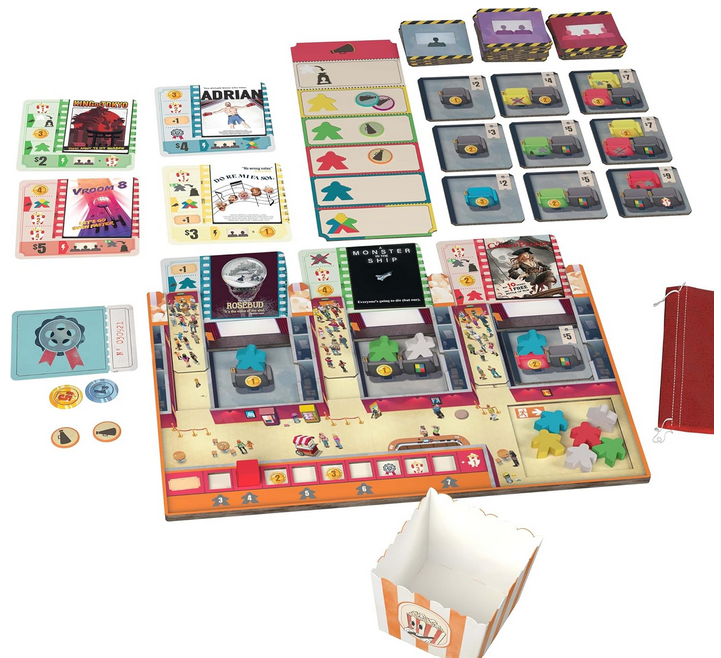
Players have a set of worker tokens — cinema staff, in the game’s thematic framing — that they deploy to different action spaces on the board. Common action spaces in the Popcorn Game include buying movies from the market, upgrading theater facilities, advertising to attract new guests, scheduling film showings, and activating the guests drawn from your bag. The constraint inherent to worker placement — that each space can only be occupied by one player’s worker, or can only be used a limited number of times per round — creates natural competition and forces players to prioritize actions against what their opponents are likely to want.
The interaction between worker placement and bag composition is where the Popcorn Game achieves its most interesting strategic moments. Your available workers constrain which actions you can take this turn; your bag draw constrains which of those actions are worth taking; and the market state constrains which movies would make those actions valuable even if you could take them. Navigating this three-way constraint system under competitive pressure — with opponents taking the spaces you need and the market offering movies that don’t quite fit your strategy — is the puzzle that makes the Popcorn Game rewarding for experienced players and engaging for newcomers.
Resource Management: Popcorn, Money, and the Cinema Economy
The resource economy of the Popcorn Game revolves around two primary currencies: money, used to buy movies, upgrade theaters, and fund advertising, and popcorn, the victory point currency that determines the winner at game end.
Managing the relationship between these two resources is a constant balancing act throughout the Popcorn Game. Spending too aggressively on movies and upgrades early in the game builds a strong strategic foundation but leaves limited resources for the advertising and guest activation that generate popcorn income. Playing too conservatively on early investment means maintaining financial flexibility but potentially falling behind competitors who built stronger theater infrastructure and are generating popcorn at higher rates.
The Popcorn Game‘s resource system rewards players who understand timing — who can identify the right moments to invest heavily in infrastructure versus the right moments to harvest the returns on prior investment. This temporal dimension of resource management, often described in game design literature as the “engine-building” quality, gives the Popcorn Game a satisfying arc across its sixty-minute runtime: the early game feels like planting seeds, the mid-game like tending a growing business, and the late game like harvesting the returns on the strategic choices made in the first two phases.
Movie Scheduling and the Staleness Mechanic: Keeping Your Lineup Fresh
One of the most thematically clever elements of the Popcorn Game is its movie staleness system — the mechanic by which films age out of audience appeal over time if not replaced, mirroring the real-world theatrical release cycle where movies draw their largest crowds in the opening weeks and decline steadily thereafter.
In the Popcorn Game, movies on your programming schedule generate diminishing returns as they age, creating pressure to continuously refresh your lineup with new acquisitions. This refreshment pressure interacts with the resource management system — replacing stale movies costs money and action resources — and with the worker placement system, since buying new movies requires deploying workers to the movie market rather than to other productive actions.
The staleness mechanic prevents any single programming strategy from becoming a set-and-forget solution in the Popcorn Game. Players must continuously monitor the age of their current films, project when replacements will be needed, and plan their resource allocation and worker deployment accordingly. This ongoing management requirement keeps the Popcorn Game engaged across all phases of play rather than resolving into a simple execution of a strategy established in the first few turns.
The Popcorn Game’s Genre System: Comedies, Sci-Fi, Arthouse, and Action
The four movie genres available in the Popcorn Game — comedies, science fiction and fantasy, arthouse and drama, and action — are not interchangeable. Each genre attracts different guest profiles, generates different popcorn returns under different conditions, and benefits from different theater configurations and advertising approaches. Understanding these genre differences is fundamental to competitive play in the Popcorn Game.
Comedies in the Popcorn Game tend to attract broad, mainstream audiences — generating reliable if not spectacular popcorn returns across a wide range of guest compositions. Comedy programming is a sensible foundation for new players learning the Popcorn Game because its returns are predictable and it doesn’t require highly specialized bag composition to perform reasonably well.
Science fiction and fantasy programming in the Popcorn Game tends to attract more dedicated genre enthusiasts — guests who generate higher popcorn returns when satisfied but who are more demanding in their programming expectations. Players who commit to a sci-fi and fantasy strategy in the Popcorn Game need to build bags and programming schedules specifically around this audience, but the payoff for successful execution is consistently strong.
Arthouse and drama is the most niche programming strategy available in the Popcorn Game, attracting a smaller but highly engaged audience segment. Arthouse programming rewards patience and specialization — the returns are modest until a specific audience and programming combination comes together, at which point the payoff can be substantial. This is generally considered a more advanced strategy in the Popcorn Game, better suited to experienced players who understand the game’s systems well enough to build toward a specific late-game payoff.
Action programming in the Popcorn Game attracts the largest potential audiences and generates the highest ceiling for single-showing returns, but also requires the most significant investment in theater upgrades and advertising to fully exploit. Action-focused players in the Popcorn Game tend to spend more heavily in the early and mid-game, betting that the higher return potential justifies the upfront cost.
The Popcorn Game’s Production Quality: What You Get in the Box
The physical quality of a board game communicates something important about the care its creators invested in the product — and the Popcorn Game communicates genuine care clearly from the moment you open the box.
The artwork is the first thing most players notice, and it earns its consistent praise. The Popcorn Game‘s visual design combines colorful illustration with genuinely funny character and movie poster designs that reward close inspection. The artists clearly understood that humor and visual richness would make the Popcorn Game more appealing at the table and more enjoyable to interact with over repeated sessions — and they delivered both qualities consistently across the component set.
The cloth bags — the Popcorn Game‘s most distinctive physical component — are well-made and functional, with drawstring closures that hold securely during play and allow comfortable single-handed drawing of tokens. The bags become familiar objects over the course of the Popcorn Game, developing a tactile familiarity that reinforces the sense of managing your own distinct guest population.
The player boards, movie cards, and token sets are produced to a quality standard that holds up well under regular play. The Popcorn Game‘s meeples — the guest and worker tokens — are distinctive and well-differentiated, making the game state readable at a glance even in complex mid-game positions.
The primary organizational criticism that experienced players raise about the Popcorn Game concerns the box storage for popcorn tokens and money — the existing container configuration can feel slightly insufficient for comfortable in-game management, and adding two additional small containers would meaningfully improve the physical experience. This is a minor criticism of an otherwise well-packaged game that fits back into the box cleanly after play — a quality that experienced board gamers know is more difficult to achieve than it sounds.
How the Popcorn Game Compares to Similar Games
Understanding where the Popcorn Game sits within the broader landscape of strategy board games helps buyers assess whether it’s the right addition to their collection.
Popcorn Game vs. Deck-Building Games
The closest mechanical relatives of the Popcorn Game are deck-building games — Dominion, Clank!, Star Realms, and similar titles where players build and refine a personal card pool over the course of play. The Popcorn Game shares the core philosophy of this genre: start with a basic pool of resources, upgrade that pool through strategic acquisition, and use an improved pool to generate better outcomes in the game’s final stages.
The key differences are the physical format (bags versus decks, which changes the draw experience and hidden information dynamics), the additional mechanical layers (worker placement and resource management sit alongside the building mechanic rather than being the sole focus), and the theme (movie theater management versus the more abstract settings of most deck-builders). Players who enjoy deck-building games will find the Popcorn Game‘s bag-building system familiar in structure but fresh in execution.
Popcorn Game vs. Worker Placement Games
Worker placement games — Agricola, Viticulture, Lords of Waterdeep, and their many relatives — will also feel familiar to the Popcorn Game‘s experienced players. The action selection pressure, the competition for limited spaces, and the strategic prioritization under constraint are all recognizable elements. The Popcorn Game sits at the lighter end of the worker placement spectrum compared to games like Agricola or Caverna, making it more accessible to players who find heavier euros demanding while still offering meaningful strategic decisions.
Popcorn Game vs. Engine-Building Games
The resource management and infrastructure investment elements of the Popcorn Game share qualities with engine-building games — titles where the primary goal is constructing systems that generate increasingly valuable outputs over time. The Popcorn Game‘s sixty-minute runtime means its engine-building arc is more compressed than games like Wingspan or Through the Ages, but the fundamental satisfaction of watching a well-constructed theater strategy pay off in the late game is genuine and rewarding.
Who Is the Popcorn Game For? A Complete Buyer’s Guide
Families with Older Children and Teenagers
The Popcorn Game‘s age recommendation of ten and up is well-calibrated. Children in the ten to fourteen range who have graduated from simpler family games and are ready for genuine strategic decision-making will find the Popcorn Game appropriately challenging without being overwhelming. The movie theater theme is inherently appealing to this age group — everyone has opinions about movies, and those opinions translate directly into investment in the programming decisions the Popcorn Game asks you to make.
For family game nights where adult and teenage players share the table, the Popcorn Game provides a level of strategic depth that keeps adult players engaged while remaining accessible enough that younger players don’t feel lost after the first session.
Hobbyist Gamers Seeking a Gateway Title
The Popcorn Game occupies an ideal position as a gateway game for the medium-weight strategy space. It introduces bag-building, worker placement, and resource management through a theme that makes these mechanics feel intuitive, without the rule complexity or session length that can make heavier games intimidating for new players.
Experienced hobbyists who want to introduce friends or partners to more strategic gaming will find the Popcorn Game a reliable choice. The theme is accessible enough that non-gamers engage with it readily, the first session runs smoothly with experienced guidance, and the game is satisfying enough that new players want to play again immediately — which is the clearest possible indicator of a successful gateway experience.
Movie Enthusiasts
The Popcorn Game‘s cinema theme gives it an appeal that transcends the board game community. Self-identified movie lovers who would never seek out a strategy board game on their own terms will readily engage with a game that asks them to program a movie theater, choose between genre strategies, and satisfy specific audience preferences. The thematic resonance creates genuine investment in the game’s decisions that more abstract strategy games cannot replicate for this audience.
Groups Looking for a 60-Minute Competitive Experience
The Popcorn Game‘s approximately sixty-minute play time positions it perfectly for groups who want a complete, satisfying competitive experience without the commitment of longer games. At two players it runs lean and fast; at four players it fills a solid game night slot without overstaying its welcome. The Popcorn Game works equally well as the main event of a shorter evening or as the second game on a longer night.
Strategies for Winning the Popcorn Game: Expert Insights
Commit to a Genre Strategy Early
Experienced Popcorn Game players consistently identify early genre commitment as one of the highest-impact strategic decisions in the game. Players who try to program a diverse mix of genres without a clear primary focus often find their bag composition fragmented — attracting guest types that don’t combine efficiently — and their resource allocation spread too thin across multiple programming strategies to excel at any of them.
Picking a primary genre by the second or third round of the Popcorn Game and building your bag, your theater upgrades, and your advertising strategy around that genre creates the kind of synergistic efficiency that wins games. Secondary genre diversity adds resilience against market unpredictability without requiring abandonment of the primary strategic focus.
Prioritize Bag Quality Over Bag Quantity
The instinct of new Popcorn Game players is often to attract as many guests as possible as quickly as possible — building the largest bag through aggressive advertising. Experienced players understand that bag quality matters more than bag size. A bag containing fifteen guests of mediocre synergy draws worse than a bag containing ten guests specifically chosen to complement your programming strategy and theater configuration.
Selective advertising — targeting the specific guest types that your genre strategy needs rather than advertising for general audience growth — is one of the most effective differentiators between novice and experienced Popcorn Game play.
Manage the Movie Market Actively
The available movies in the Popcorn Game‘s market shift over time as players buy and the deck refreshes. Experienced players track what genres are appearing frequently in the market, anticipate what competitors are likely to buy, and time their own movie acquisitions to coincide with market states that favor their strategy.
Buying a movie that doesn’t perfectly fit your strategy but that your opponent desperately needs is occasionally the highest-value action available in the Popcorn Game — a denial play that costs you little but costs your opponent significantly. Recognizing when this play is available requires attention to opponent strategies that new players rarely invest in, but that experienced Popcorn Game players treat as essential ongoing information gathering.
Plan Your Staleness Refreshes in Advance
The movie staleness mechanic creates predictable pressure points — moments when your programming needs refreshment regardless of your preferred timing. Experienced Popcorn Game players plan their resource reserves and worker deployment around these predictable renewal moments, ensuring they have the money and available workers to refresh their lineup when needed rather than being caught without the resources to replace aging films.
Being surprised by staleness pressure — running out of resources to replace declining films at a critical moment — is one of the most common ways that well-built strategies collapse in the Popcorn Game. Experienced players treat movie age tracking as a first-order strategic consideration rather than a secondary concern.
Common Mistakes New Popcorn Game Players Make
Underestimating the Setup Complexity
The Popcorn Game box contains a significant number of components, and the initial setup can feel overwhelming to new players who open the box expecting something simpler. This first impression causes some players to underestimate the game’s approachability, assuming that many components imply high rules complexity. In practice, the Popcorn Game is considerably more accessible than its component count suggests — the pieces are numerous but each has a clear and logical function that becomes obvious within a single play session.
New players benefit from having an experienced player set up the game before others arrive at the table, removing the visual overwhelm of the initial unboxing and allowing the first session to begin with a clear, organized game state.
Neglecting Advertising in the Early Game
The temptation in early Popcorn Game turns is to spend all available resources on movies and theater upgrades — building the infrastructure for a strong mid-game position. Players who neglect early advertising, however, often find themselves in the mid-game with excellent programming but thin bags that can’t generate the draws needed to exploit that programming effectively.
Balancing early advertising investment against infrastructure development is one of the first genuine strategic lessons the Popcorn Game teaches, and players who learn it in the first session gain a meaningful advantage in all subsequent plays.
Waiting Too Long to Refresh the Lineup
New Popcorn Game players often hold onto aging movies longer than experienced players would, either because they haven’t fully internalized the staleness mechanic or because they don’t yet have a replacement strategy ready. The result is a period of reduced popcorn income that compounds into a meaningful competitive disadvantage by the time the replacement eventually happens.
Developing comfort with proactive lineup refreshment — replacing films before they become a significant drag rather than after — is one of the clearest markers of Popcorn Game experience, and it’s a habit that pays dividends in every session.
The Popcorn Game in the Broader Gaming Landscape of 2026
The Popcorn Game arrived at a moment when the tabletop gaming market was particularly receptive to its specific combination of qualities. The ongoing growth of the hobby gaming market has created an audience that is simultaneously more sophisticated in its mechanical expectations and more interested in games with strong thematic identity than at any previous point in the hobby’s history.
The Popcorn Game serves both of these audience priorities. Its mechanical combination of bag-building, worker placement, and resource management speaks to players who want genuine strategic depth. Its cinema theme, colorful artwork, and humor speak to players who want games that feel alive and engaging at the table rather than clinical and abstract. And its sixty-minute runtime and accessible learning curve speak to groups who want a complete, satisfying experience without the commitment that heavier games require.
In a market where the distance between “casual” and “hardcore” gaming products has sometimes felt unbridgeable, the Popcorn Game occupies exactly the middle ground that the largest segment of the hobby gaming audience actually inhabits — experienced enough to appreciate real mechanics, busy enough to value accessible runtimes, and enthusiastic enough about great themes to make decisions based on what a game is about as much as how it plays.
Final Verdict: Is the Popcorn Game Worth Adding to Your Collection?
The Popcorn Game earns an enthusiastic recommendation for a wider range of buyers than most games in its category. The combination of genuine mechanical depth, strong thematic integration, excellent production quality, and a runtime that fits comfortably into any game night format makes it one of the more complete packages available in the medium-light strategy space.
For families with children aged ten and up, the Popcorn Game is an excellent introduction to the kind of strategic thinking that the deeper end of the hobby offers, wrapped in a theme that creates immediate buy-in across age groups. For experienced gamers looking for a reliable gateway title to introduce to less experienced friends and partners, the Popcorn Game is one of the strongest options currently available. And for movie enthusiasts who might not otherwise seek out strategy games, the cinema theme creates a point of engagement that can open the door to a broader appreciation of the hobby.
The minor luck variance that some experienced players find slightly frustrating is a genuine design trade-off rather than a flaw — it’s the mechanism that keeps the Popcorn Game accessible to less experienced players and ensures that no single strategy dominates so completely that the game loses its competitive tension. Players who prefer tighter, more deterministic experiences will want to account for this element in their purchasing decision; players who enjoy the interplay of planning and adaptation will find it adds rather than detracts from the experience.
Whatever brings you to the Popcorn Game — the theme, the mechanics, a friend’s recommendation, or the simple appeal of running a movie theater in competitive company — you are unlikely to be disappointed. This is a game that delivers on its promise, rewards the time you invest in understanding it, and consistently generates the shared laughter and competitive engagement that make the best tabletop games worth returning to.
Grab your popcorn. The show is about to begin.
Explore More Games, Brands, and Play Experiences
The Popcorn Game is one of the most rewarding strategy games in its category — but it’s one title within a much larger world of games worth knowing. Whether the cinema management theme brought you here, a friend’s recommendation pointed you in this direction, or you’re simply researching before making a purchase decision, the same instinct that led you to a game this well-crafted will serve you well across every category of play.
Game for Gamers is the complete resource for players of every kind — covering strategy board games, collectible card games, video games across every major platform, educational toys for young children, gaming hardware and peripherals, and the full spectrum of outdoor, party, and travel games that complete a well-rounded collection. Every guide, review, and brand breakdown on the site is written from the buyer’s perspective: honest about trade-offs, specific about age-appropriateness and replay value, and focused on helping you find games that actually get played rather than games that simply look good in a box.
From IELLO titles like the Popcorn Game through Nintendo, LEGO, Hasbro Gaming, Games Workshop, and dozens of other brands across every category of play — Game for Gamers covers the full landscape so you can shop with confidence, gift with certainty, and play with more joy every time you sit down at the table.
What type of game is Popcorn and how complex is it?
Popcorn is a medium-light competitive strategy board game that combines elements of worker placement, resource management, and bag-building mechanics within a movie theater management theme. It is accessible enough for players new to these mechanics to learn within a single session, while containing enough strategic depth to reward experienced players who think carefully about bag composition, movie scheduling, and guest management. Most players describe the complexity level as comfortably between casual family games and heavy euro-style strategy games — approachable on first play but offering genuine strategic decisions to explore across multiple sessions.
What is the bag-building mechanic and how does it work in Popcorn?
The bag-building mechanic is Popcorn’s central innovation. Each player manages a cloth bag containing guest tokens, and the composition of that bag — which types of guests you’ve attracted and activated — determines what options are available to you each turn when you draw from it. Over the course of the game, players work to improve their bags by attracting new guests through advertising, activating the right guests at the right moments, and building toward draws that support their theater’s specific movie programming strategy. The physical cloth bags add a satisfying tactile dimension to the mechanic that card-based deck-building games can’t replicate, and the hidden information created by concealed bags adds a layer of strategic uncertainty that keeps opponents guessing.
How long does a game of Popcorn take to play?
Popcorn is designed for approximately 60 minutes of play time. In practice, first-time players may run slightly longer as they familiarize themselves with the game’s phases and decision points, while experienced players who know the flow well may complete games closer to 45 minutes. The 60-minute play time makes Popcorn an excellent choice for dedicated game nights where you want a complete, satisfying experience without committing to a multi-hour session — and it fits naturally as either the main event of a shorter game night or as one of two games in a longer evening.
How many players does Popcorn support and does it work at all player counts?
Popcorn supports two to four players. At two players, the game moves quickly once both players understand the phases — rounds resolve faster with fewer turns between your own, and the competition for available movies and meeples feels more direct. At three and four players, the game opens up with more competition for the best films, more interaction around guest placement, and a fuller sense of a bustling marketplace. Both experiences are enjoyable, though the game’s semi-competitive nature means that most player interaction comes through buying a desirable movie before an opponent can or taking a meeple from another player’s theater rather than through direct confrontation. Players who prefer lighter interaction will find all player counts comfortable.
What age group is Popcorn appropriate for?
Popcorn is designed for ages ten and up. The game’s mechanics — resource management, scheduling decisions, bag composition strategy — require a level of planning and multi-step thinking that develops around this age. The movie theater theme is universally appealing across a wide age range, making it a natural choice for families with older children, teenage groups, and adults. The lighthearted artwork and accessible theme also make it a strong gateway game for adults who don’t have much board game experience but are comfortable with the general concept of running a business or managing resources.
How does the movie selection mechanic work in Popcorn?
Players buy movies from a shared market and add them to their theater’s programming schedule. Movies span multiple genres — comedies, sci-fi and fantasy, arthouse and drama, and action — and different genres appeal to different types of guests. Matching the right movies to your audience composition is the primary strategic puzzle of Popcorn: a theater full of action fans won’t generate maximum popcorn from an arthouse double feature, and vice versa. Movies also age out of relevance over time, requiring players to refresh their programming or risk losing their audience to more current offerings. This scheduling pressure creates ongoing decisions throughout the game that prevent any single strategy from dominating without adaptation.
Is Popcorn suitable for people who don’t normally play strategy board games?
Yes, with minor caveats. Players who are completely new to worker placement or resource management games may find the initial rules explanation slightly involved — the game has multiple phases and several interconnected systems that take one full play to internalize. However, most first-time players report that the game clicks into place within the first few rounds and becomes intuitive quickly. The movie theater theme helps enormously here: because the game’s logic mirrors the real-world logic of running a cinema, most decisions feel intuitive rather than arbitrary. Buying a popular movie to attract more guests, advertising when your theater is empty, and pulling stale films from your schedule all make thematic sense that reinforces the mechanical understanding. For groups with at least one experienced player to guide the first session, Popcorn is genuinely accessible to newcomers.
What are the biggest strategic considerations in Popcorn?
The most experienced Popcorn players focus on three interconnected strategic priorities. First, bag composition — building a bag of guests that consistently produces the draws you need for your theater’s specific programming strategy. Second, movie scheduling — knowing when to commit to a genre strategy and when to pivot based on what the market makes available. Third, timing — understanding when to activate guests for maximum popcorn yield versus when to hold them for a more valuable future turn. The tension between planning ahead for a specific outcome and adapting when the available movies or draw results don’t cooperate is the game’s central strategic challenge, and navigating it well is what separates consistent winners from players who feel at the mercy of luck.
Customer Reviews
I bought Popcorn for my husband as a Christmas gift because he is obsessed with movies — the kind of person who has opinions about aspect ratios and gets genuinely upset when a film is cropped wrong on streaming. I figured a movie theater management game was a reasonable bet. What I didn’t expect was for it to become one of our most-played games of the year.
The directions took us a full read-through and one practice round to really absorb — there are several interconnected phases and it’s the kind of game where everything makes more sense once you’ve seen it in motion than when you’re reading about it on paper. But once it clicked, it really clicked. My husband immediately started theorizing about optimal bag-building strategies, which is exactly the kind of engagement you want from a gift purchase.
What strikes me most about Popcorn is how well the theme holds together mechanically. Deciding which movies to program based on your current audience, refreshing your lineup before films go stale, advertising to attract new guests — it all feels genuinely connected to the real experience of running a cinema rather than just using movie aesthetics as decoration on top of abstract mechanics. The production quality is excellent too. Everything feels well-made, the artwork is charming and funny, and it all fits back in the box cleanly after play. Highly recommend for anyone who loves movies and wants a strategy game that actually earns its theme.
Going to be honest: I picked up Popcorn expecting something fairly light. The colorful artwork, the popcorn theme, the cheerful box — it all read as casual filler. I was wrong, and I mean that as a genuine compliment.
The bag-building mechanic is more satisfying than I anticipated. There’s real decision-making in how you build your guest pool, which types you prioritize attracting, and when you activate versus hold. The movie selection layer adds another dimension because what’s available in the market doesn’t always align with what your bag is set up to exploit — and learning to work with imperfect conditions rather than waiting for the ideal situation is where the actual skill lives.
My main honest criticism is that luck can swing harder than I’d prefer, particularly with bag draws in critical late-game moments and with which movies appear in the market at key decision points. There were a couple of sessions where my strategy was sound but the execution fell apart because the pieces I needed simply didn’t show up. That variability won’t bother players who prefer lighter, more casual experiences, but players who like to feel firmly in control of their outcomes may find it occasionally frustrating.
The artwork deserves a separate mention — it’s hilarious in the best way, and it keeps the mood at the table light even when the strategy gets tense. The table presence of this game is genuinely excellent. Overall, a strong recommendation for anyone who likes medium-weight strategy with great visual appeal and a theme that actually works.
When I first opened the Popcorn box I genuinely thought I’d made a mistake. There are a lot of pieces. Tokens, meeples, bags, cards, boards — it looked like the kind of game that would require a spreadsheet and three hours of setup just to get started. Reader, I was wrong.
The first playthrough went smoother than I had any right to expect. Once someone explains that the game has distinct phases and walks through what happens in each one, the whole thing clicks into a clear and logical flow. Within about twenty minutes of our first session, everyone at the table was making strategic decisions with confidence rather than constantly checking the rulebook.
What I love most is how the different mechanics combine. The worker placement element gives you meaningful decisions on every turn. The resource management creates genuine constraints that force prioritization. And the bag-building adds a layer of variability and anticipation that keeps every draw exciting. None of these mechanics are revolutionary on their own — but they fit together cleanly, and the movie theater theme ties them into a coherent experience that feels more cohesive than games with more disparate moving parts.
The only minor organizational complaint is that the box storage could use two additional containers for popcorn tokens and money — managing those pieces in the existing setup is slightly fiddly. It’s a small inconvenience in an otherwise well-packaged game that puts everything back neatly after play. If you’re on the fence, take the jump. Popcorn is colorful, genuinely strategic, and consistently gets people laughing around the table. That combination is harder to find than it looks.